What is sinusitis in children?
Sinusitis (rhinosinusitis) is the inflammation of the mucosa lining the paranasal sinuses. In children, the sinuses develop gradually: the ethmoidal and maxillary sinuses are present from birth, the sphenoid sinus develops around the age of 5, and the frontal sinus after 7-8 years of age.
It is estimated that 5-10% of viral nasopharyngitis cases in children are complicated by bacterial sinusitis. The differential diagnosis from a common cold is essential for proper treatment.
Symptoms
Acute sinusitis
- Purulent rhinorrhea — yellowish-green nasal discharge, persisting for more than 10 days
- Nasal congestion — bilateral nasal obstruction
- Cough — predominantly nocturnal or upon waking, caused by postnasal drip
- Facial pain — less commonly expressed in young children, sometimes headache
- Fever — may be present, especially in bacterial sinusitis
- Halitosis — foul-smelling breath
- Periorbital edema — a warning sign that may indicate a complication
Chronic sinusitis
Symptoms persist for more than 12 weeks and include:
- Chronic anterior and posterior rhinorrhea
- Persistent nasal obstruction
- Chronic cough, especially nocturnal
- Reduced sense of smell (hyposmia)
Causes
Sinusitis in children occurs through:
- Viral infections — the common cold (rhinoviruses, respiratory syncytial virus) — the main cause
- Bacterial superinfection — Streptococcus pneumoniae, Haemophilus influenzae, Moraxella catarrhalis
- Allergic rhinitis — allergic inflammation predisposes to blockage of the sinus ostia
- Adenoid hypertrophy — adenoid vegetations can obstruct sinus drainage
- Nasal septum deviation
- Immunodeficiencies — in children with recurrent or severe sinusitis
- Gastroesophageal reflux — a contributing factor to chronic sinus inflammation
Diagnosis
- Medical history and clinical examination — the temporal criterion is essential (symptoms lasting more than 10 days or worsening after day 5-7)
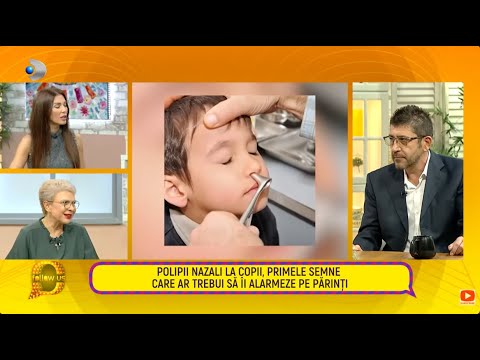
- Nasal endoscopy — reveals purulent secretions at the level of the middle meatus, mucosal edema
- Sinus computed tomography (CT) — indicated only in chronic sinusitis or suspicion of complications, not in uncomplicated acute forms
- Allergy testing — in children with recurrent sinusitis on an allergic background
Sinus X-ray is not routinely recommended in children under 6 years of age due to low specificity. Nasal endoscopy provides much more precise information.
Treatment
Acute sinusitis
- Antibiotic therapy — amoxicillin or amoxicillin-clavulanate, 10-14 days, for bacterial forms
- Saline nasal irrigation — essential for clearing secretions and improving drainage
- Nasal corticosteroids — reduce mucosal inflammation and facilitate drainage
- Analgesics-antipyretics — paracetamol or ibuprofen for pain and fever
- Nasal decongestants — only for short periods (3-5 days) in children over 6 years old
Chronic sinusitis
- Prolonged courses of antibiotic therapy (3-6 weeks)
- Long-term nasal corticosteroids
- Treatment of associated causes (allergy, adenoid vegetations)
- Adenoidectomy — when adenoid hypertrophy contributes to chronic sinusitis
- Endoscopic sinus surgery — reserved for cases refractory to conservative treatment
When to see a doctor
- Purulent nasal discharge persisting for more than 10 days without improvement
- High fever (above 39°C) with purulent nasal discharge from the onset of illness
- Worsening of symptoms after initial improvement (biphasic pattern)
- Periorbital swelling or redness — requires urgent evaluation
- Severe headache, neck stiffness, or deterioration of general condition
- Recurrent sinusitis (more than 4 episodes per year)
Complications
Although sinusitis is usually a benign condition, it can develop serious complications:
- Orbital complications — periorbital and orbital cellulitis, subperiosteal abscess — surgical emergencies
- Intracranial complications — meningitis, epidural abscess, cavernous sinus thrombophlebitis — rare but very serious
- Frontal osteomyelitis — in adolescents, with frontal swelling (Pott's puffy tumor)
- Asthma exacerbation — in children with associated asthma
- Otitis media — through spread of infection via the Eustachian tube

Suspect sinusitis in children? Schedule a consultation for diagnosis and a personalized treatment plan.