What is an ENT doctor and what do they do
The ENT doctor (otorhinolaryngologist) is the specialist who diagnoses and treats conditions of the ear, nose, and throat, in both adults and children. In the case of children, the ENT consultation is particularly important because many conditions can affect the child's normal development if not diagnosed and treated in time.
Although the paediatrician is the child's primary doctor and manages most health problems, certain symptoms and situations require evaluation by an ENT specialist with experience in paediatric pathology.
Persistent nasal obstruction
Does your child have a frequently or permanently blocked nose? Nasal obstruction lasting more than 2-3 weeks or recurring constantly requires ENT evaluation. Possible causes:
- Hypertrophic adenoid vegetations (adenoids)
- Untreated allergic rhinitis
- Nasal septal deviation
- Nasal polyps (rare in children, but possible)
The ENT specialist can perform a nasal endoscopy to identify the exact cause of the obstruction. The procedure is quick, painless, and provides precise information about the condition of the nasal cavities and adenoid vegetations.
Snoring and breathing pauses during sleep
Occasional snoring in children may be normal during a cold, but regular snoring (on most nights) is not normal at any paediatric age. Signs that should alarm you:
- Loud snoring, audible from another room
- Breathing pauses during sleep (the child appears to stop breathing for a few seconds)
- Very restless sleep, with excessive sweating
- The child sleeps in unusual positions (with the neck hyperextended)
- Daytime fatigue, difficulty concentrating, irritability
- Nocturnal enuresis (bedwetting) in a child who was previously continent
These symptoms may indicate obstructive sleep apnoea syndrome, a condition that requires diagnosis and treatment. The most common cause in children is adenotonsillar hypertrophy, treatable surgically through adenoidectomy and/or tonsillectomy.
Recurrent ear infections
Ear infections (acute otitis media) are very common in young children. An ENT evaluation is recommended when:
- The child has more than 3 ear infections in 6 months or 4 in 12 months
- The ear infection does not respond to antibiotic treatment prescribed by the paediatrician
- The child has ear discharge (secretions from the ear)
- Serous otitis is suspected (persistent fluid behind the eardrum)
The ENT specialist will evaluate the eardrum through otoscopy, perform a tympanogram to check middle ear function and, if necessary, will recommend tympanic ventilation tube insertion to prevent complications and hearing loss.
Hearing problems
If you suspect your child does not hear well, it is essential to consult an ENT specialist as soon as possible. Signs of hearing loss in children vary by age:
- In infants and toddlers: does not turn towards sounds, does not react to their name, delay in speech development
- In preschool and school-age children: speaks loudly, turns up the television volume, does not respond when called from another room, attention problems at school, speech regression
Hearing loss in children can be conductive (caused by serous otitis, cerumen plugs, middle ear malformations) or sensorineural. Hearing screening and complete audiological evaluation allow early diagnosis and timely intervention, essential for normal language development.
Recurrent tonsillitis
Frequent sore throats and recurrent tonsillitis require ENT evaluation. The classic criteria for surgical consultation (Paradise criteria) include:
- 7 or more episodes of tonsillitis in the past year
- 5 or more episodes per year in the past 2 years
- 3 or more episodes per year in the past 3 years
Each episode must be documented with at least one of: fever above 38.3 degrees, tonsillar exudate, cervical lymphadenopathy, or positive streptococcal culture. If these criteria are met, tonsillectomy may be indicated.
Voice changes
A hoarse or nasal voice that persists for more than 2-3 weeks requires ENT evaluation. Possible causes include:
- Vocal cord nodules (common in children who shout a lot)
- Chronic laryngitis
- Laryngeal papillomatosis (rare, but important to rule out)
- Chronic nasal obstruction (nasal voice)
Frequent nosebleeds
If the child has frequent nosebleeds (more than once a week) or episodes that are difficult to stop, an ENT consultation is necessary to identify the cause and potentially cauterise the bleeding area.
Foreign bodies in the nose or ear
Young children (especially between 2 and 5 years) sometimes insert small objects into their nose or ear. Signs of a nasal foreign body include: unilateral discharge with an unpleasant smell, bleeding from one nostril, and unilateral nasal obstruction. Do not attempt to remove the foreign body yourself — you risk pushing it deeper. See the ENT specialist who has the necessary instruments for safe extraction.
Enlarged cervical lymph nodes
Lymph nodes (glands) on the neck are frequently enlarged in children during respiratory infections and this is usually normal. Consult an ENT specialist if:
- A lymph node exceeds 2 cm and does not shrink after 4-6 weeks
- The lymph node is hard, fixed, and painless
- It appears in the supraclavicular area
- It is associated with prolonged fever, weight loss, or night sweats
How the ENT consultation for children works
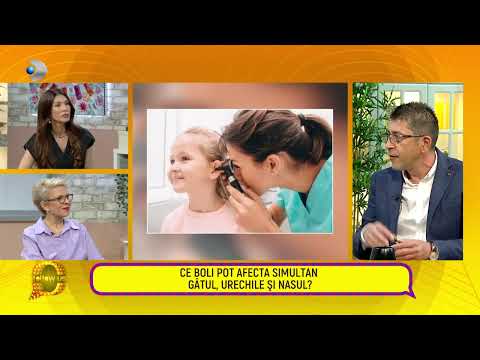
The ENT consultation for children is usually painless and lasts 15-30 minutes. The doctor will examine the child's ears, nose, and throat with specific instruments, perform otoscopy, check auditory function, and, if necessary, perform a nasal endoscopy. It is important to prepare the child by calmly explaining what will happen, to reduce anxiety.
When in doubt, it is better to consult. An early ENT evaluation can identify and treat problems that, if unaddressed, can affect the child's development — from hearing and speech problems to sleep and growth disorders.
Conclusion
An ENT consultation is recommended whenever you notice signs in your child suggesting ear, nose, or throat problems that do not resolve on their own or with the paediatrician's treatment. Early diagnosis and appropriate treatment are essential to ensure healthy development and a good quality of life for your child.
Related TV appearances
Have questions or notice these symptoms? We recommend a specialist consultation.
Book an appointment → →