What is nasal obstruction in children?
Nasal obstruction in children refers to the partial or complete blockage of the nasal passage, preventing normal nasal breathing. It is one of the most common reasons parents seek a pediatric ENT consultation. Children with nasal obstruction breathe predominantly through the mouth, snore during sleep, and may have feeding difficulties at young ages.
This condition can be temporary — in the context of a common cold — or chronic, when caused by persistent anatomical or allergic factors.
Symptoms
The manifestations of nasal obstruction vary depending on the underlying cause and the child's age. The most common symptoms include:
- Mouth breathing — the child keeps the mouth open during the day and while sleeping
- Nighttime snoring — sometimes accompanied by apnea episodes
- Rhinorrhea — abundant nasal discharge, clear or purulent
- Nasal voice — altered, "stuffy" voice
- Chronic cough — especially at night, caused by posterior nasal drip
- Feeding difficulties — in infants and young children
- Restless sleep — with frequent awakenings and daytime fatigue
Causes
Nasal obstruction in children can have multiple causes, often associated with one another:
Adenoid vegetations (adenoid hypertrophy)
This is the most common cause of chronic nasal obstruction in children aged 2 to 7 years. Adenoid vegetations are lymphoid tissue formations located in the nasopharynx, which obstruct the nasal airway when enlarged.
Allergic rhinitis
Allergic rhinitis causes chronic inflammation of the nasal mucosa with edema, hypersecretion, and persistent congestion. It is common in children with an atopic predisposition.
Upper respiratory tract infections
Acute viral nasopharyngitis (common colds) is the most frequent cause of temporary nasal obstruction. Sinusitis can complicate these episodes.
Nasal septum deviation
Although more common in adults, nasal septum deviation can also occur in children, causing unilateral obstruction.
Intranasal foreign bodies
In young children, the accidental insertion of small objects into the nose can cause unilateral obstruction with foul-smelling purulent rhinorrhea.
Diagnosis
The diagnosis of nasal obstruction in children is based on:
- Detailed medical history — duration of symptoms, aggravating factors, family allergy history
- ENT clinical examination — anterior rhinoscopy, oroscopy, otoscopy
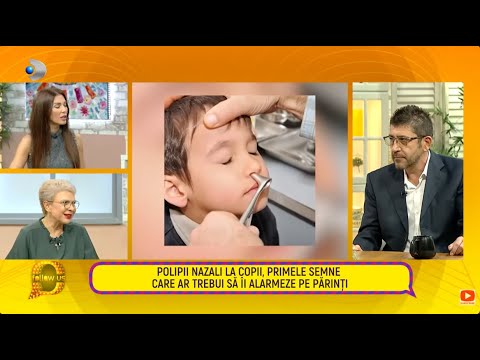
- Nasal endoscopy — allows direct visualization of the nasal cavity and nasopharynx, providing information about adenoid volume and mucosal condition
- Lateral cavum X-ray — assessment of adenoid size (less commonly used due to endoscopy)
- Allergy testing — prick test or specific IgE, when an allergic component is suspected
Nasal endoscopy is the investigation of choice for evaluating nasal obstruction in children, being quick, non-invasive, and providing a clear image of the nasal cavities.
Treatment
Treatment of nasal obstruction depends on the identified cause:
Medical treatment
- Nasal lavage with saline solutions — first-line treatment for any form of nasal obstruction
- Nasal corticosteroids — effective in allergic rhinitis and in reducing adenoid volume
- Antihistamines — in seasonal or perennial allergic rhinitis
- Antibiotics — only in confirmed bacterial infections (sinusitis, purulent rhinosinusitis)
Surgical treatment
When conservative treatment is not effective, surgery may be recommended. Adenoidectomy is indicated for obstructive adenoids that do not respond to medical treatment.
When to see a doctor
Consult an ENT specialist in the following situations:
- The child has been breathing predominantly through the mouth for more than 2-3 weeks
- Nighttime snoring is persistent and accompanied by breathing pauses
- Recurrent episodes of otitis or sinusitis occur
- Unilateral purulent nasal discharge (suspicion of foreign body)
- The child shows excessive daytime sleepiness or concentration difficulties
- Facial or dental development is affected
Complications
Untreated chronic nasal obstruction can lead to significant complications:
- Obstructive sleep apnea syndrome — with consequences on neurocognitive development
- Adenoid facies — changes in facial structure due to chronic mouth breathing
- Serous otitis — through Eustachian tube dysfunction, with risk of hearing loss
- Recurrent sinusitis — due to blocked sinus drainage
- Developmental disorders — attention deficit, irritability, poor school performance
- Orthodontic anomalies — high-arched palate, dental malocclusion
Frequently Asked Questions
Why does my child breathe through the mouth?
Mouth breathing occurs when the child cannot breathe sufficiently through the nose. The most common causes are: enlarged adenoids, allergic rhinitis, nasal septum deviation or nasal infections. Prolonged mouth breathing can affect facial development and sleep quality.
When should I see a doctor for my child's blocked nose?
Consult an ENT doctor if nasal obstruction persists for more than 2-3 weeks, if your child snores every night, predominantly breathes through the mouth, or has breathing pauses during sleep.


Suspect nasal obstruction in children? Schedule a consultation for diagnosis and a personalized treatment plan.