What is nasal endoscopy?
Nasal endoscopy (nasofibroscopy or video nasal endoscopy) is a diagnostic investigation through which the ENT specialist directly visualizes the internal structures of the nose, sinuses, nasopharynx, and larynx. A flexible or rigid endoscope is used — a thin tube equipped with a video camera and a light source — inserted through the patient's nostrils.
In children, nasal endoscopy is an essential diagnostic tool, allowing precise evaluation of the causes of nasal obstruction, snoring, persistent nasal discharge, or allergic rhinitis. Dr. Vlad Postelnicu, co-author of the Atlas of Endoscopy in Otorhinolaryngology (Romanian Academy Publishing House), uses video endoscopy as an integral part of the pediatric ENT consultation.
When is nasal endoscopy necessary?
Nasal endoscopy in children is indicated in numerous clinical situations:
- Chronic nasal obstruction — to identify the cause: adenoid hypertrophy, septal deviation, turbinate hypertrophy, nasal polyps.
- Snoring and suspicion of sleep apnea — evaluation of adenoid size and degree of upper airway obstruction.
- Chronic or recurrent rhinosinusitis — visualization of the ostiomeatal complex, pathological secretions, and possible polyps.
- Recurrent epistaxis — identification of the source of nasal bleeding.
- Suspicion of nasal foreign body — common in young children, endoscopy allows localization and extraction of the object.
- Evaluation of tubal function — visualization of the pharyngeal orifice of the Eustachian tube in children with recurrent middle ear infections.
- Postoperative monitoring — follow-up after adenoidectomy, sinus surgery, or other nasal procedures.
Preparing the child
Nasal endoscopy does not require complex special preparation, but a few aspects are important:
- Fasting is not required — the investigation does not involve general anesthesia, so the child can eat and drink normally.
- Nasal decongestant — the doctor may apply a local decongestant-anesthetic spray a few minutes before the procedure to facilitate endoscope passage and reduce discomfort.
- Emotional preparation — explaining the procedure in a calm tone, adapted to the child's age. For young children, the parent's presence in the office is essential for comfort.
- Blood tests are not required — it is a completely non-invasive investigation.
Tip for parents: Tell your child that the doctor will "photograph" the inside of the nose with a "small camera." Most children tolerate the procedure excellently when informed and reassured.
How is the investigation performed?
The procedure takes place in the medical office, with the child seated in the examination chair (or in the parent's arms for young children):
Nasal endoscopy steps
- Local anesthesia — a nasal spray with anesthetic and decongestant substance is applied. The effect appears within 2–3 minutes.
- Endoscope insertion — the flexible endoscope (with a diameter of 2.4–3.4 mm for children) is gently inserted through the nostril.
- Systematic examination — the doctor successively visualizes the nasal vestibule, nasal turbinates, middle meatus, nasopharynx, adenoid vegetations, and, if necessary, the larynx.
- Video recording — the entire examination is recorded, allowing documentation and time-based comparison of findings.
The investigation takes 2–5 minutes. Discomfort is minimal — a sensation of pressure or "tickling" in the nose. The investigation is not painful.
What can nasal endoscopy diagnose?
Nasal endoscopy provides valuable diagnostic information, superior to simple clinical examination:
- Adenoid hypertrophy — direct visualization and evaluation of the degree of obstruction (essential information before a possible adenoidectomy).
- Septal deviation — identification and severity assessment.
- Turbinate hypertrophy — frequently associated with allergic rhinitis.
- Nasal polyps — direct visualization of polyps and evaluation of their extent.
- Nasal foreign bodies — precise localization for extraction.
- Sinus pathology — purulent secretions at the sinus ostia level.
- Laryngeal pathology — laryngomalacia, vocal cord nodules, laryngeal paresis.
Risks and contraindications
Nasal endoscopy is a very safe investigation with minimal risks:
- Minor epistaxis — mild nasal bleeding, self-limiting, possible especially in children with fragile mucosa.
- Temporary discomfort — burning sensation or tearing during the examination, which disappears immediately after endoscope withdrawal.
- Vasovagal reaction — extremely rare in children.
There are no absolute contraindications. The investigation may be postponed in case of severe active epistaxis or a recent untreated nasal fracture.
Diagnostic value and benefits
Nasal endoscopy is considered the gold standard in evaluating nasal and nasopharyngeal pathology in children:
- Precise diagnosis, superior to simple radiography and speculum clinical examination.
- Possibility of video recording for monitoring the evolution over time.
- Guidance of therapeutic decisions — surgical or conservative — based on objective data.
- Rapidly repeatable investigation, without ionizing radiation.
Nasal endoscopy results are available immediately, allowing the doctor to discuss the diagnosis and therapeutic options with parents during the consultation itself. Images and video recordings can be reviewed at subsequent consultations to evaluate the evolution under treatment.
Dr. Vlad Postelnicu uses nasal video endoscopy as a standard part of pediatric ENT evaluation, considering it indispensable for a complete diagnosis and an individualized therapeutic plan.
Related TV appearances
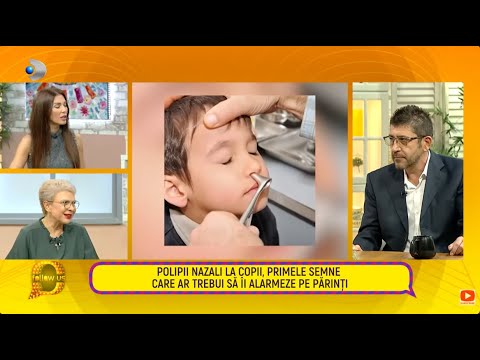
Want more details about nasal endoscopy? I will explain the procedure steps and answer your questions during the consultation.